The Future Won’t Be Written for India. It Will Be Written by India
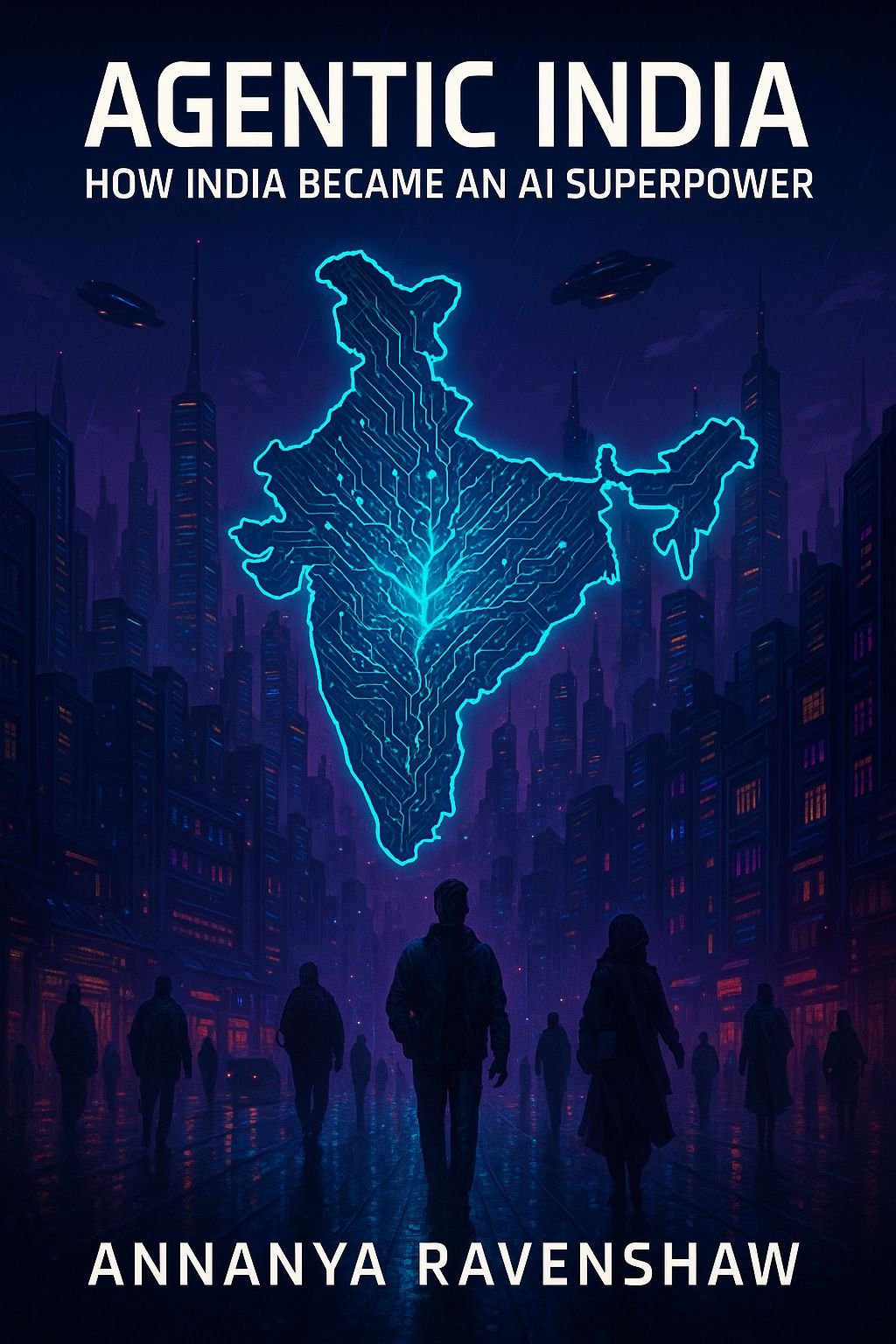
A billion people. A billion choices. Agentic India reveals how the world’s largest democracy is seizing control of its destiny in an age of AI, climate crisis, and cultural upheaval.
The future of India is not a headline. It is a lived experience, unfolding every day in crowded city streets, remote villages, digital platforms, and silent acts of defiance. Agentic India captures this transformation in motion—where tradition meets disruption, and where the dreams of ordinary citizens are reshaping the narrative of an entire nation.
This is not a story about governments or institutions. It is about agency—the power to act, to choose, and to create. From young coders in Bengaluru rewriting the rules of technology, to grassroots activists fighting for climate justice, to artists reclaiming public spaces with visions of hope, Agentic India reveals the hidden forces that turn individual sparks into national fire.
Every page is a mirror and a provocation. It reflects the contradictions of modern India—its dazzling innovation and its unhealed divides—while challenging readers to confront a simple question: What does it mean to take ownership of the future when the ground beneath our feet is shifting faster than ever before?
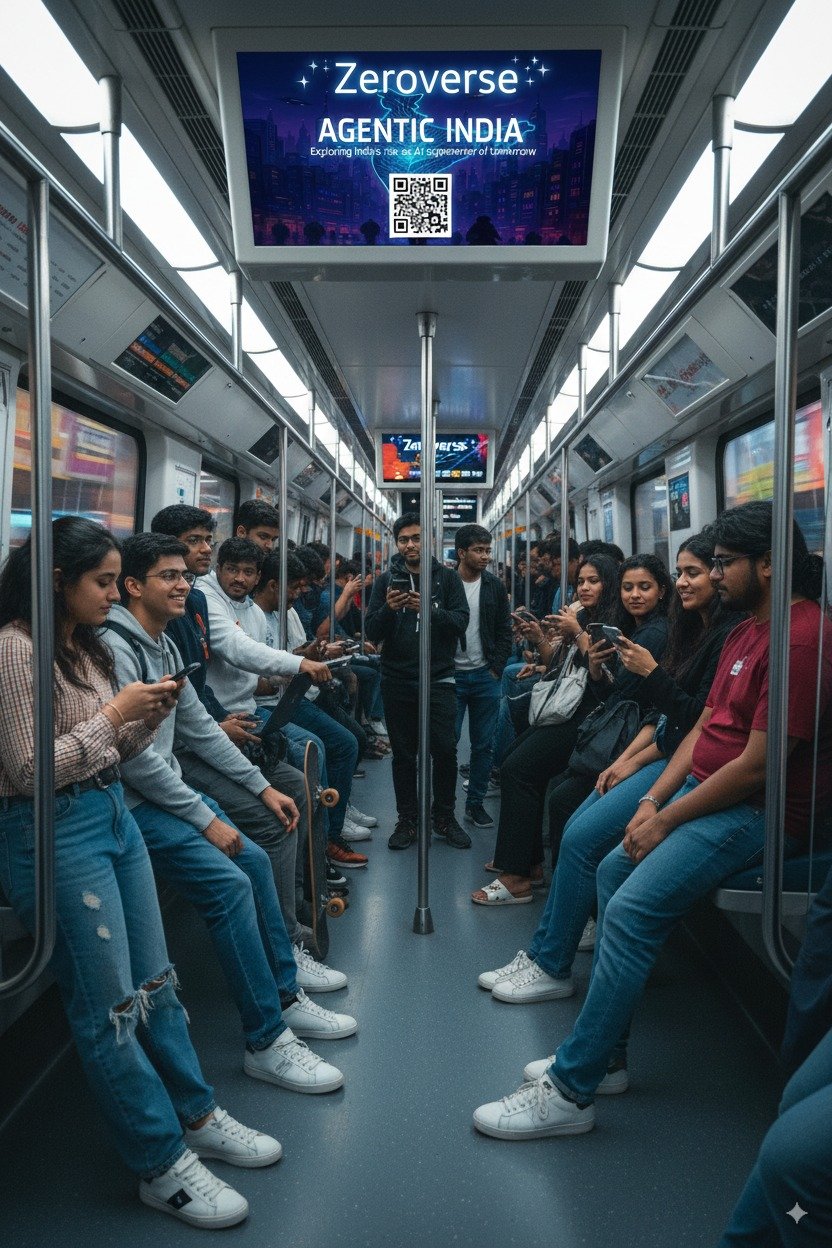
Whether you are in Delhi, Silicon Valley, or anywhere in between, this book speaks to a universal truth: agency is contagious. When a billion people begin to act with purpose, they don’t just change their own country—they tilt the axis of the world. Agentic India is your invitation to witness, and to join, that movement.?
Through the Lens of Readers
4.5
Adewale Okoro - Lagos
4.5
Camila Rocha - Recife
4.0
Lorenzo Bianchi - Bari
4.0
Charlotte Bennett - Leeds
Agentic India
Author
A. Ravenshaw
Annanya Ravenshaw’s career has always been shaped by curiosity. For over a decade, she worked as a Montessori teacher, nurturing children’s natural sense of wonder and independence. Her fascination with how people learn eventually drew her into the world of artificial intelligence, where she became a researcher focused on machine learning. Joining a stealth-mode AI start-up gave her a front-row seat to the excitement and turbulence of building technology at the edge of possibility.
When the start-up came to an end, Annanya chose to follow the passion that had always been waiting quietly in the background: writing. Her books bring together the patience of a teacher, the analytical lens of a researcher, and the imagination of a storyteller. She writes to explore how humans adapt — to new ideas, new technologies, and new ways of seeing the world.
Read Free
Included with Kindle Unlimited. Start reading Zeroverse today at no extra cost with your subscription.
Elena Mirova, the Russian cognitive therapist now based in Dharavi, heard about the shift and came to visit. She found Ayaan fixing a solar panel on the NGO’s rooftop, earbuds in, AI logs open on his tablet. “You didn’t just rewrite the model,” she said, watching a group of kids use the AI to practice debate in Urdu, Hindi, and Punjabi. “You changed its heart.”
Read it free today, or own it forever — either way, you win.
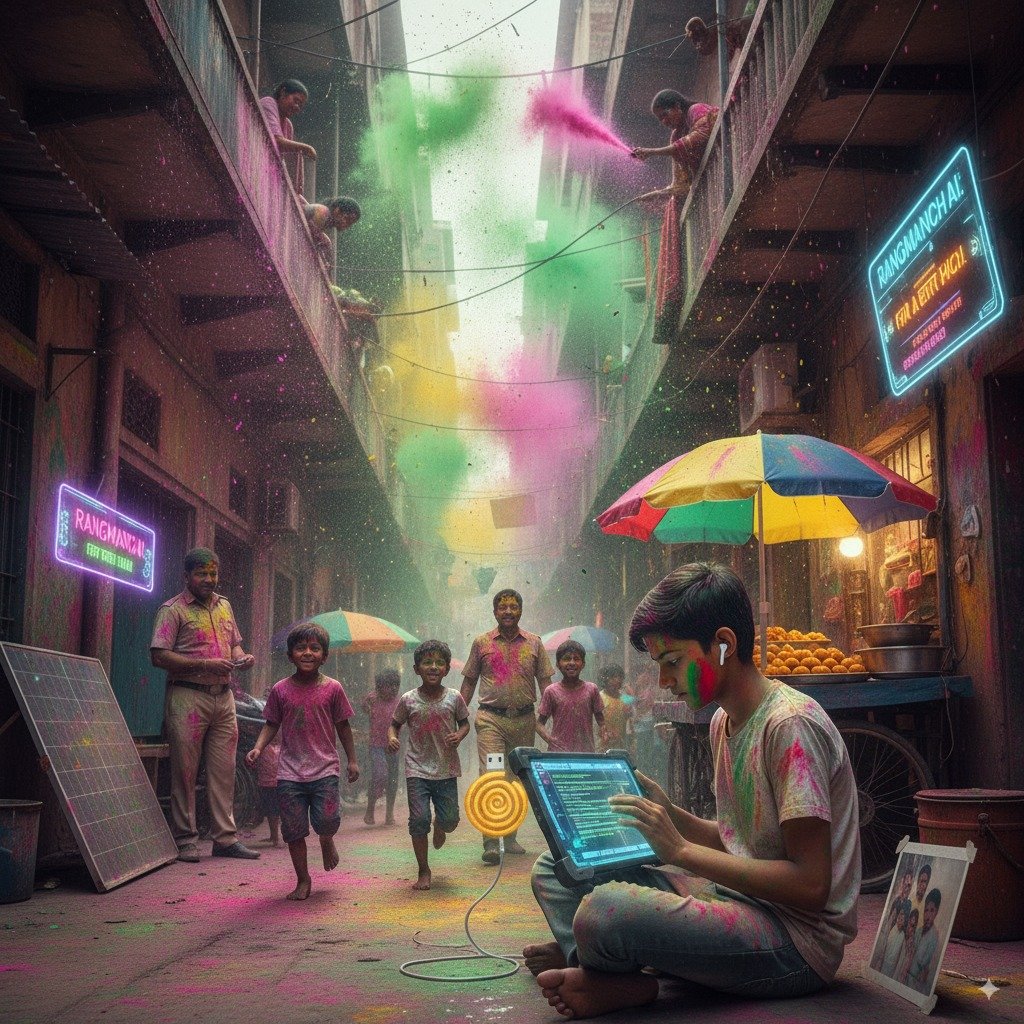
It started the way most revolutions do in Delhi—by accident, and in the middle of Holi. In the chaotic heart of Mehrauli, colors rained from every balcony. The air smelled of gujiyas and gunpowder, and laughter ricocheted down narrow galiyan where families had lived for generations. Ayaan stood in the middle of it all, a splotch of green and red powder across his cheek, staring at the blinking console in the NGO’s courtyard tech tent. The AI had flagged his neighborhood as a Category-3 Aggression Zone. Again.
The NGO had deployed the AI just a week before, a goodwill initiative called Rangmanch. It was designed to mediate mohalla disputes—boundary fights, water tank arguments, Holi prank fallouts—by classifying spoken emotion during neighborhood conversations. The AI used a “color-coded classifier,” a spectrum designed to interpret tone: red for rage, blue for sadness, green for calm, yellow for excitement. But within days, Ayaan noticed a pattern. Every time voices got loud during Holi—joyful, high-pitched, teasing—the AI flagged aggression. Worse, it always flagged homes in the lower lanes, the ones with less influence and older caste baggage. The model had learned to associate volume with threat, dialect with violence, skin with bias.
Ayaan’s mother called it “digital casteism.” His father called it “business as usual.” Ayaan, sixteen, a coder from the school’s AI club and a reluctant Holi participant, called it “a bug dressed like a badge.” And when he saw his neighbor Ritu's father getting questioned by police after a flagged ‘red-level’ conversation—one that was actually about sharing leftover laddoos—he knew he couldn’t let it go.
That night, while the rest of the city soaked in bhang and bhaangra, Ayaan sneaked into the NGO’s open WiFi with an old USB stick shaped like a jalebi coil. It contained a soft override he’d written during coding camp last summer—an empathy patch that re-weighted emotion detection based on context, not tone. Instead of flagging aggression, it boosted conversations where mutual words appeared: “acha laga,” “kya chahiye,” “batao yaar,” “samajh gaya.” It didn’t just listen to voice—it listened to meaning.
Uploading it wasn’t hard. The NGO’s firewall was childproof. What Ayaan didn’t expect was how fast it would spread. By morning, the modified AI was no longer confined to one neighborhood. USBs had been passed along during gulal exchanges like secret Holi gifts. “Dekho yeh naya model hai, bhai, zyada samajhta hai,” someone whispered at a dhobi ghat. “Achi baat sunta hai, report nahi karta bina soche.” By the end of the festival, the empathy patch had become the Mohalla Model.
Within days, its effects were visible. The police hotline received fewer automated reports. A housing dispute in Lado Sarai ended in chai, not shouting. Two teenagers in Jahangirpuri used the system’s playback feature to de-escalate a turf argument, realizing their language had hurt each other without meaning to. And most shockingly, the AI started suggesting community dialogues instead of alerts.
Elena Mirova, the Russian cognitive therapist now based in Dharavi, heard about the shift and came to visit. She found Ayaan fixing a solar panel on the NGO’s rooftop, earbuds in, AI logs open on his tablet. “You didn’t just rewrite the model,” she said, watching a group of kids use the AI to practice debate in Urdu, Hindi, and Punjabi. “You changed its heart.”
Ayaan shrugged. “Didn’t change it. Just taught it to feel.”
But not everyone was happy. The original developers, part of a Delhi-based policy lab with quiet funding from OpenBrain affiliates, sent a cease-and-desist notice. They called the empathy patch “unverified emotional engineering.” They warned of “ethical contagion.” They accused Ayaan of destabilizing a calibrated system.
“They’re scared of softness,” Elena said, sipping raat ki chai. “It’s not your code they fear. It’s your compassion.”
The next night, Ayaan released the patch to the public domain. No license. No profit. Just a note written in Hinglish: “Jab tak mohalla zinda hai, model bhi zinda rahega. Boli se hi toh sab badlega.” (As long as the neighborhood lives, so will the model. It’s all in the way we speak.)
Soon, schools across the NCR began integrating empathy models into AI ethics classes. NGO workers used it to resolve disputes in slums and posh colonies alike. Even Riya Sen, now back in Bengaluru, mentioned it in a LokAI panel. “It’s not about the AI becoming more human,” she said. “It’s about us remembering to speak like humans.”
The Holi Model, once a flawed classifier with caste-coded ghosts, had become something else. Not perfect. Not even polished. But real. Local. Reflective. It could still be tricked, still got confused by sarcasm, still stumbled over Delhi slang like “chill maar” or “tu toh boss hai.” But it learned.
And every Holi after that, kids didn’t just throw colors. They passed around tiny drives, each loaded with the latest empathy update. Gali se gali, mohalla se mohalla, the model evolved—one laughter-flag, one “kya haal hai” at a time.
In a world where alignment was debated in Geneva and ethics written by foreign labs, Delhi’s kids rewrote code through conversation. And in the narrow streets lit with rangoli and resistance, the AI didn’t just see noise. It saw nuance.
And that, Ayaan thought, was the most human thing of all.
In Delhi’s alleys of Holi 2040, a jalebi-shaped USB sparked a revolution—where AI learned to listen, not accuse.



 In Delhi’s alleys of Holi 2040, a jalebi-shaped USB sparked a revolution—where AI learned to listen, not accuse.