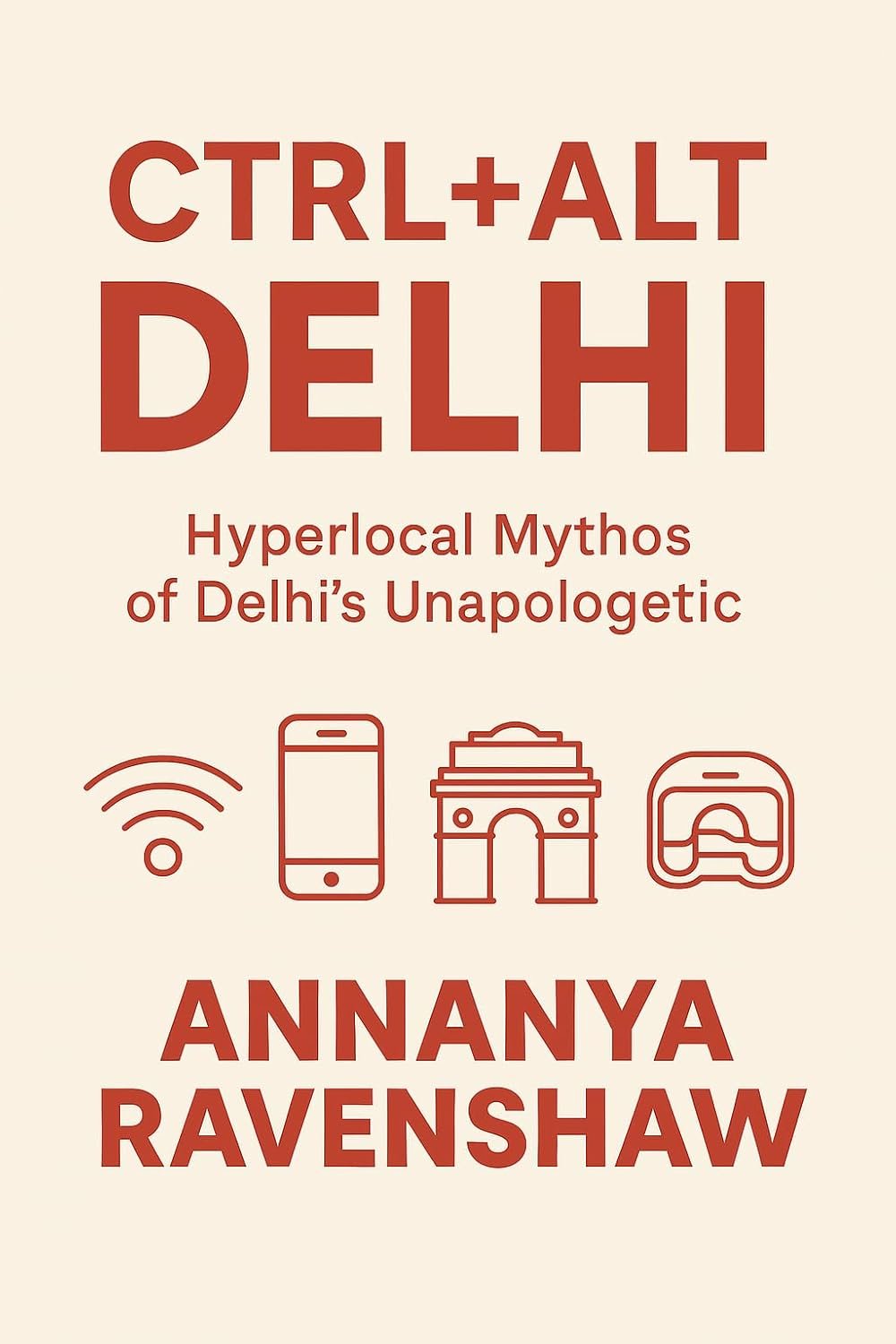
In the alleys of Delhi where tradition collides with code, a new revolution sparks—not on the streets, but in the circuits of artificial intelligence. CTRL ALT Delhi is a story of a city learning to fight back against the systems that were never designed for it.
Delhi is more than a city. It’s a motherboard of memory, identity, and resistance. In CTRL ALT Delhi, the chaos of Holi powders, the hum of bazaars, and the shadows of power converge with futuristic AI that doesn’t just watch people—it judges them. But when a teenage coder discovers the system’s fatal flaw, the city finds itself on the edge of an unexpected uprising, one where algorithms meet empathy, and rebellion comes in lines of code.
This is not dystopia imported from the West—it is born from the bylanes of Mehrauli, the rooftops of Old Delhi, and the whispered Hinglish of mohallas. The book is fiercely local yet universally relevant, showing how AI bias, surveillance, and caste-coded ghosts of the past shape the futures of millions. Every page immerses you in neon-lit realism, where joy, injustice, and rebellion paint the city as vividly as Holi itself.
CTRL ALT Delhi isn’t just about technology—it’s about power. Who controls the code? Who gets flagged, filtered, or forgotten? And what happens when the very people written out of the future decide to rewrite it themselves? These questions pulse at the heart of the book, gripping readers with a mix of urgency and intimacy that makes it impossible to put down.
For fans of speculative fiction, South Asian futurism, and stories that ask hard questions about justice, CTRL ALT Delhi delivers both adrenaline and insight. It’s not just a novel—it’s a call to imagine better AI, better cities, and better futures. The kind of story that lingers long after the last page, urging you to look at your own world and ask: if Delhi can reboot, why can’t we?
Through the Lens of Readers
4.5
Arjun Malhotra - East of Kailash
4.0
Simran Kaur - Panchsheel Enclave
4.0
Kabir Mehra - Safdarjung Enclave
3.5
Tanya Ahuja - CR Park
From the World of the Book
Author
A. Ravenshaw
Annanya Ravenshaw’s career has always been shaped by curiosity. For over a decade, she worked as a Montessori teacher, nurturing children’s natural sense of wonder and independence. Her fascination with how people learn eventually drew her into the world of artificial intelligence, where she became a researcher focused on machine learning. Joining a stealth-mode AI start-up gave her a front-row seat to the excitement and turbulence of building technology at the edge of possibility.
When the start-up came to an end, Annanya chose to follow the passion that had always been waiting quietly in the background: writing. Her books bring together the patience of a teacher, the analytical lens of a researcher, and the imagination of a storyteller. She writes to explore how humans adapt — to new ideas, new technologies, and new ways of seeing the world.
Read Free
Included with Kindle Unlimited. Start reading Zeroverse today at no extra cost with your subscription.
It escalated like all Delhi fights do—slowly, then all at once. A Zepto delivery guy tripped over a child’s Crocs, spilling protein bars onto Karan’s menu board. Dev’s intern started chanting “Paneer Power” as a joke. Someone from the burger side screamed “Soya sucks!” And then, from the far end of the court, an auto driver who was stuck waiting for a pickup yelled: “Side do, bhai! Parking nahi mil rahi! Khaane ke liye bhi raid lagwaoge kya?”
Read it free today, or own it forever — either way, you win.
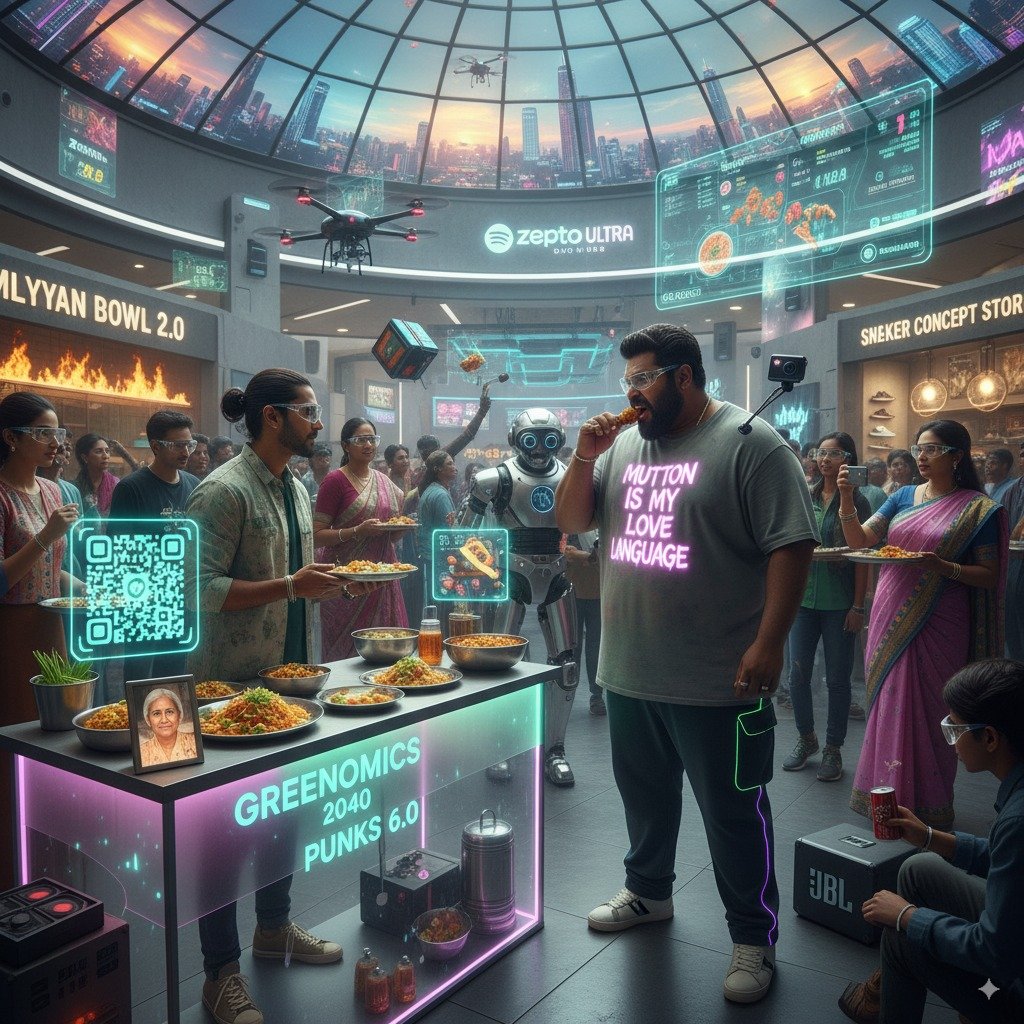
DLF Mall, Noida, hummed like a phone on silent vibrate—subtle, buzzing, always a notification away from implosion. It was a dry March afternoon; the kind where the sky looked AI-generated and the inside of the mall was colder than necessary, like it was designed for humans wearing puffers indoors for aesthetic reasons. Near the food atrium—wedged between a Himalayan bowl chain and a brutalist sneaker concept store—Karan Oberoi was adjusting the jaggery in his tamarind dip, one bamboo spoon at a time.
His stall was called Greenomics, a vegan chaat initiative “powered by empathy and jackfruit.” The signboard had soft pastel gradients, hand-lettered by a calligrapher he found on Threads. It had QR codes that linked to his Insta page and his Wellness and Wokism meme archive. Karan—long hair tied into a neat low bun, silver rings on his index and pinky finger, recycled cotton kurta—kept his voice low and his turmeric microgreens misted. He liked food to whisper, not shout.
What people didn’t see: Karan had grown up in Rajouri Garden, where his nana ji ran a legendary chai stall outside Liberty Cinema. Karan used to run across the road with kulhads. His pivot to veganism came post-consulting burnout. He’d once worked at Bain and eaten paneer in boardrooms with Gantt charts. But now, his Excel sheets tracked beetroot fermentation, and his WhatsApp groups had names like “Plant-Based Punks” and “Jackfruit AF.”
He didn’t want to go viral. He just wanted someone to taste his baingan bhel and think about the climate.
Which is precisely when the crowd parted like gossip at a shaadi, and Dev Chopra arrived.
Dev—Noida's meat messiah, food vlogger, certified spice-scorcher. He wore a faded tee that said “Mutton Is My Love Language.” His YouTube channel, Burgers & Biryani, had 2.8 million subscribers and a cult following for his burger roasts, ghee-smeared gym routines, and viral "MeatTok" reels. He was known for calling oat milk “corporate whitewash” and once deep-fried a vegan brownie to "free its soul."
He and Karan had been batchmates at DPS RK Puram once, both voted “Most Likely to Marry Their Brand.” But while Karan went on to shadow spiritual retreats and tweet about mycelium, Dev had built a personality on resisting tofu like it was colonial rule.
“Arrey, bhai!” Dev grinned, already live on IG. “Mall ke food court mein woke war ho gaya kya?”
Karan didn’t look up. He was placing his signature chaat-on-a-leaf combo for a passing college couple—quinoa golgappas, mushroom dahi, and beetroot chutney with no garlic.
Dev strolled over, camera guy in tow, chewing a kebab aggressively.
“This guy,” he announced, pointing, “makes biryani without biryani. It’s like Tinder without regret.”
A few aunties laughed. One of them took out her phone and started filming both stalls in vertical, whispering, “Yeh ladka toh bada progressive ho gaya hai.”
Karan looked up, calm. “You’re free to like meat, Dev. Just don’t call jackfruit an identity crisis.”
Dev leaned in. “And you're free to be vegan, bro. Just don't act like eating rajma makes you Gandhi.”
It escalated like all Delhi fights do—slowly, then all at once. A Zepto delivery guy tripped over a child’s Crocs, spilling protein bars onto Karan’s menu board. Dev’s intern started chanting “Paneer Power” as a joke. Someone from the burger side screamed “Soya sucks!” And then, from the far end of the court, an auto driver who was stuck waiting for a pickup yelled:
“Side do, bhai! Parking nahi mil rahi! Khaane ke liye bhi raid lagwaoge kya?”
The mall's internal security stepped in. A bored cop sipping Coke behind the H&M clearance rack wandered over, notebook in hand, pretending to write.
Meanwhile, Leela Iyer, who ran a kombucha stall two booths away, whispered to her friend, “This is more dramatic than Season 4 of Bigg Boss: Vegan Edition.”
But Karan didn’t flinch. He looked at his nana ji's photo clipped quietly on the cart’s edge. Then at his cooling tamarind glaze. He climbed onto his folding stool—wearing his DIY upcycled sneakers from Majnu Ka Tila—and said softly, into the growing chaos:
“Jackfruit has texture. So does memory. My food doesn’t need to shout.”
Silence. Then, a teenage girl from Noida Sec-62 college stepped forward, chewing gum, filming on Snapchat. “Can I try?” she asked.
Karan nodded, passing her a bowl. She took a bite, blinked. “It tastes like… Diwali, but make it sad.”
“I’ll take that as a compliment.”
More came. A DU influencer. A startup guy from Gurugram. Two Korean tourists who thought it was art. A quiet queue formed. Dev stopped filming. His tripod guy paused, raising an eyebrow.
Dev walked over. “Okay, okay. I’ll admit it—your sabudana sev tastes less like sadness than I imagined.”
Karan smirked. “Coming from you, that’s a Michelin star.”
Then Dev did something wild. He ordered one. Paid via Paytm. Took a bite. And chewed.
“This,” he said slowly, “tastes like you hugged a baingan.”
Karan raised a brow. “And?”
“And maybe that baingan needed it.”
They both laughed.
Later, after the drama cooled and the mall crowd ebbed into branded silence, they sat on the smoking zone steps outside, watching a skateboarder attempt a rail grind near the Zara Men’s.
Dev pulled out a protein bar and offered it. Karan refused. He opened a fig-and-jaggery laddoo wrapped in banana leaf. Shared it anyway.
“So,” Dev said, brushing tikki crumbs off his joggers, “collab coming or not?”
Karan shrugged. “Only if you don’t call it ‘Meat the Tofu.’”
Dev grinned. “Done. We’ll call it Life Protocol. First episode: Rajma Revolution.”
From across the parking lot, a guy screamed at a Blinkit driver. The neon lights flickered. Somewhere, someone started playing Chaiyya Chaiyya on a JBL speaker.
And the mall, as always, swallowed it all—noise, nonsense, nostalgia—like it was just another day.
A vegan chaat stall powered by jackfruit goes head-to-head with a meat vlogger empire under the neon sky of DLF Mall.



 A vegan chaat stall powered by jackfruit goes head-to-head with a meat vlogger empire under the neon sky of DLF Mall.